Problem
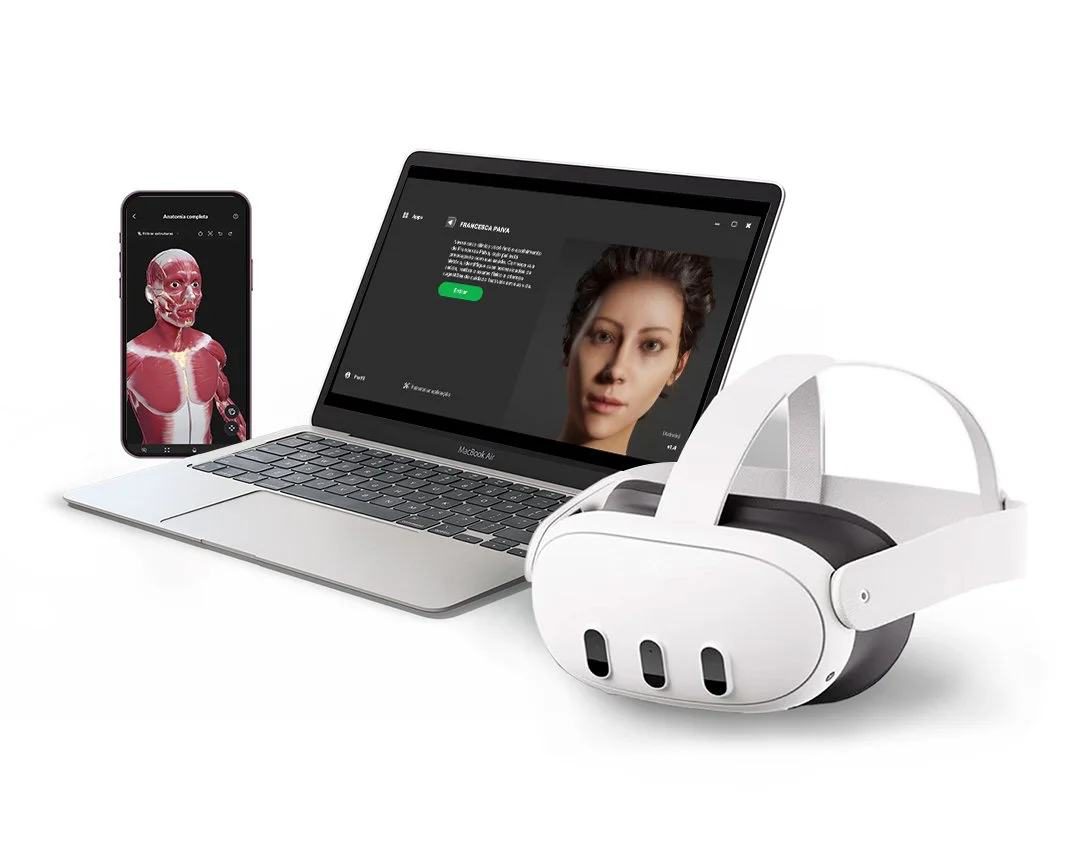
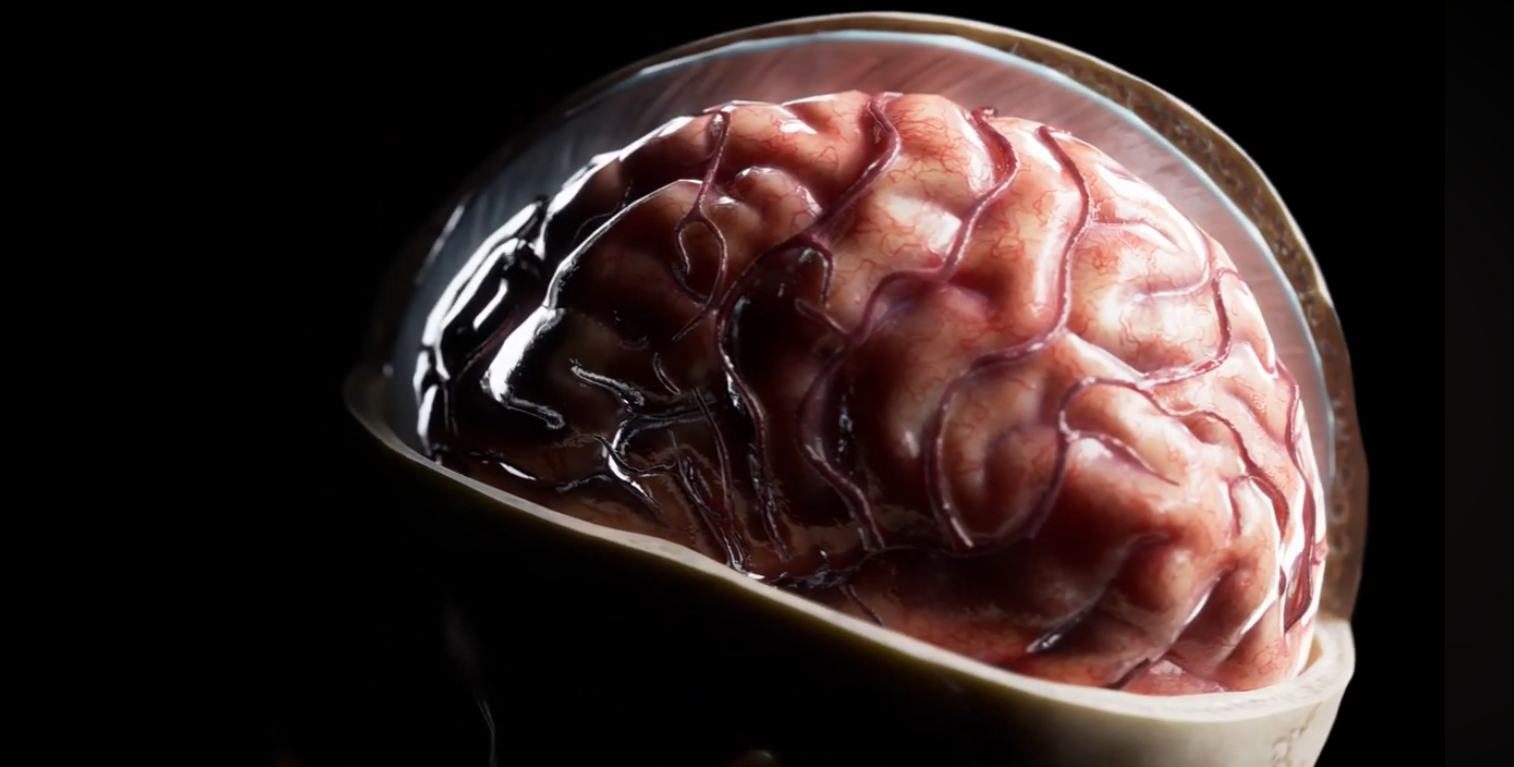
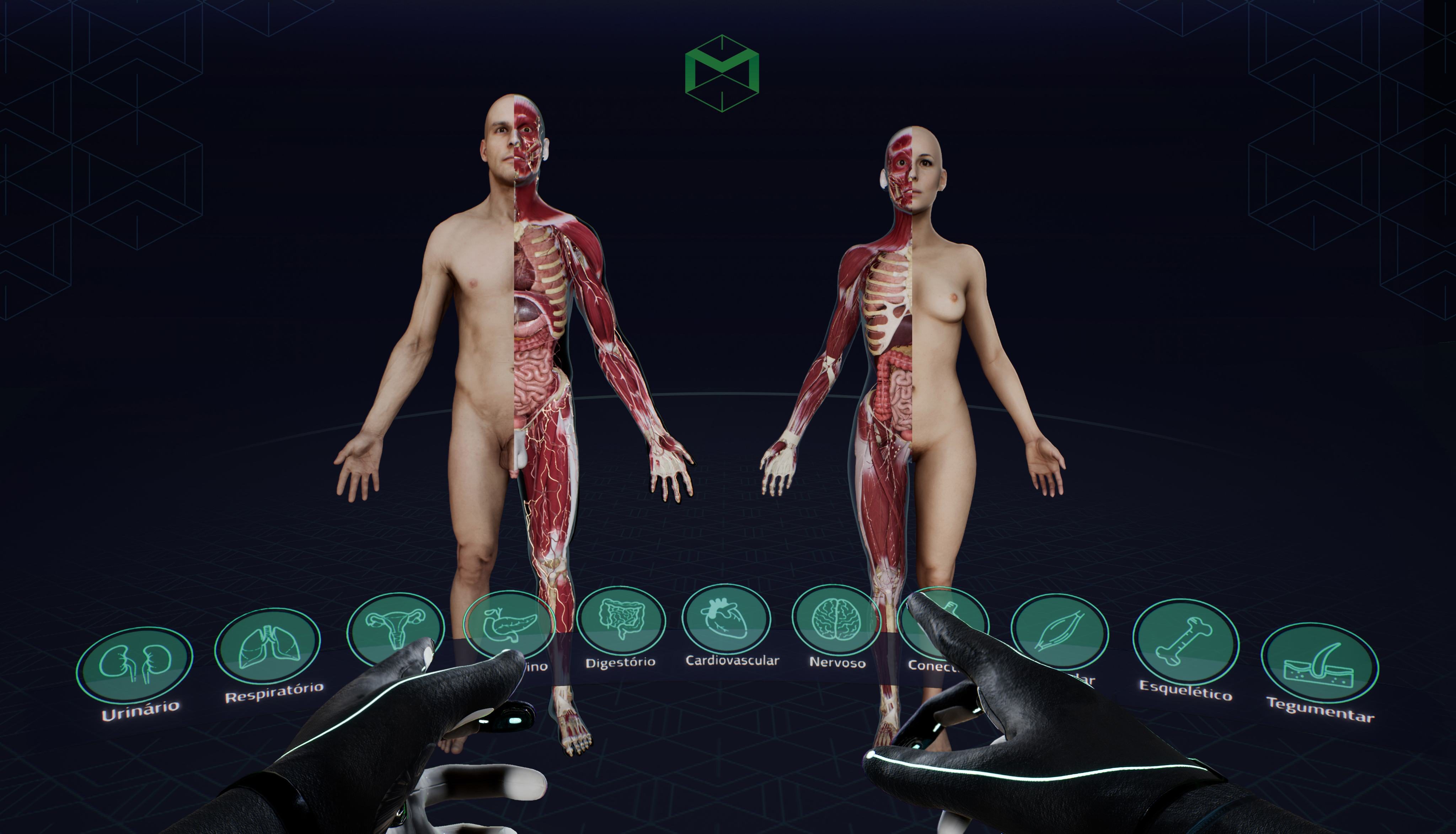
Known as MedRoom’s Lab or Anatomy, this project lets users interact with more than 4,400 3D anatomical models inside an immersive virtual reality (VR) environment. My goal was to lead a re-evaluation and propose a new experience and interface that resolved friction points for users (mostly medical students) while allowing new features to be implemented with low effort.
Interviews, qualitative research, field visits, a systemic understanding of the educational structure, sentiment mapping, persona definition and user journeys were some of the methods that opened the production process.
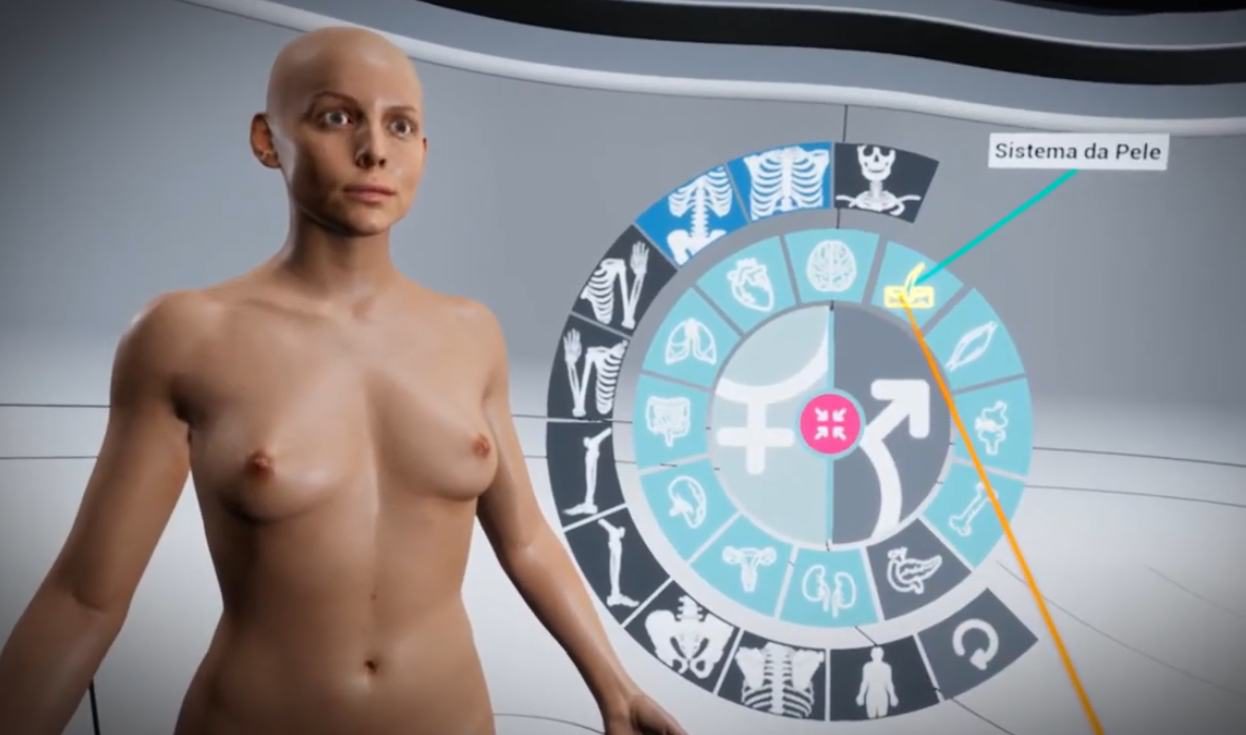
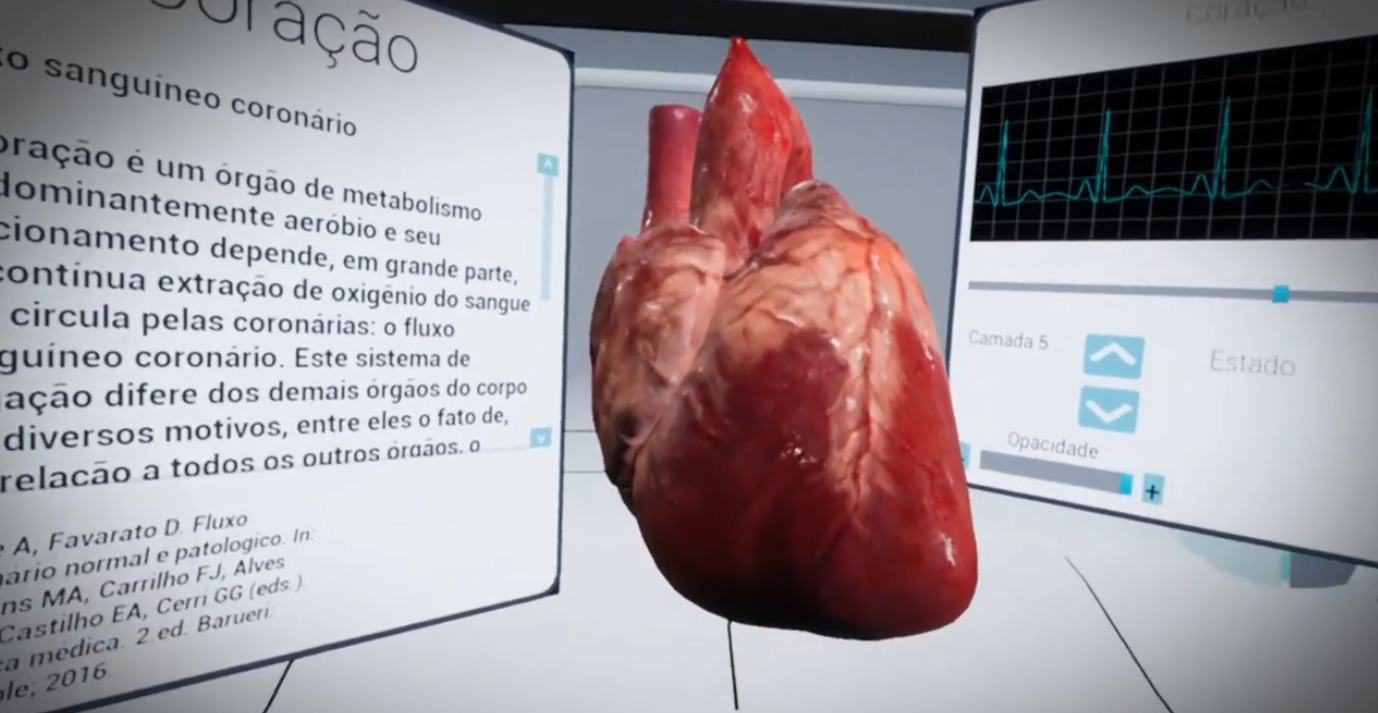
VR adds intrinsic complexities that were always taken into account throughout the process: the user’s sometimes conflicted relationship with equipment perceived as “too technological”, the hardware learning curve, possible software errors, the motor coordination required to map buttons onto interfaces inside a 360° environment, and the limits of the human body itself, such as fatigue and motion sickness.
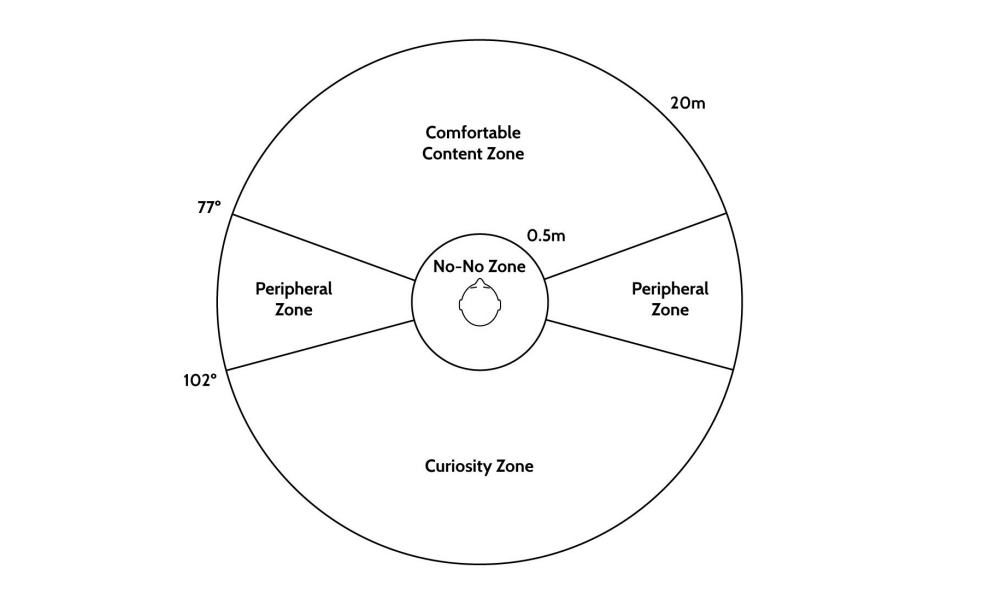
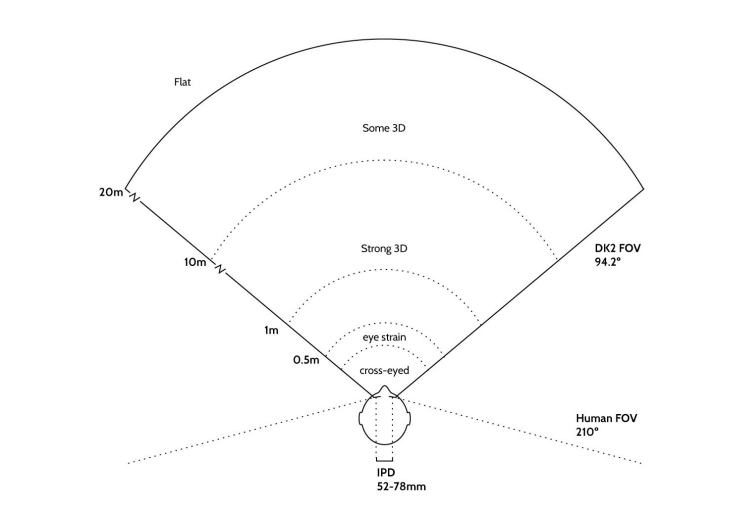
Ergonomics
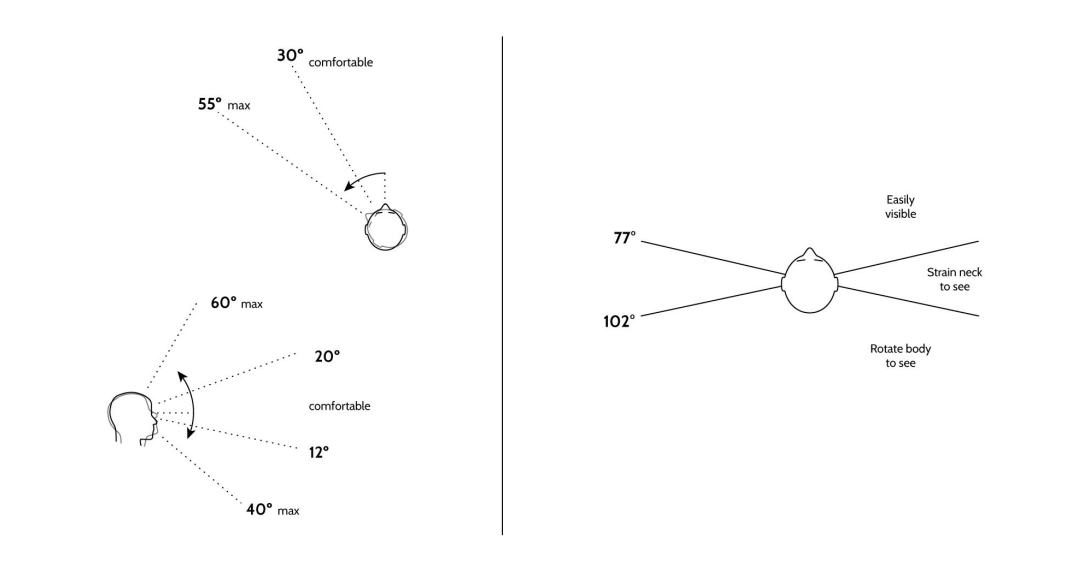
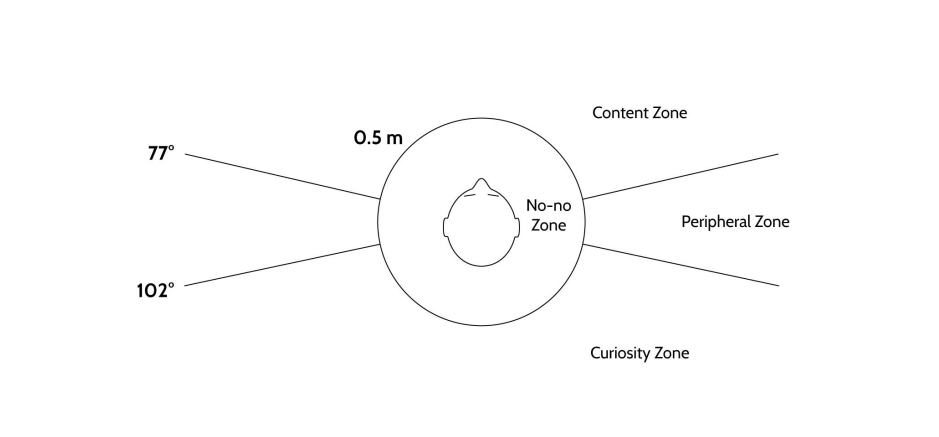
In a three-dimensional context, ergonomics guidelines set the foundation of the UI. Critical parameters such as the headset’s Field of View (FOV), neck comfort zones and visual fatigue prevention guided every design decision, from type sizing to the spatial placement of panels, ensuring natural gestural interactions during long study sessions.
Sketches
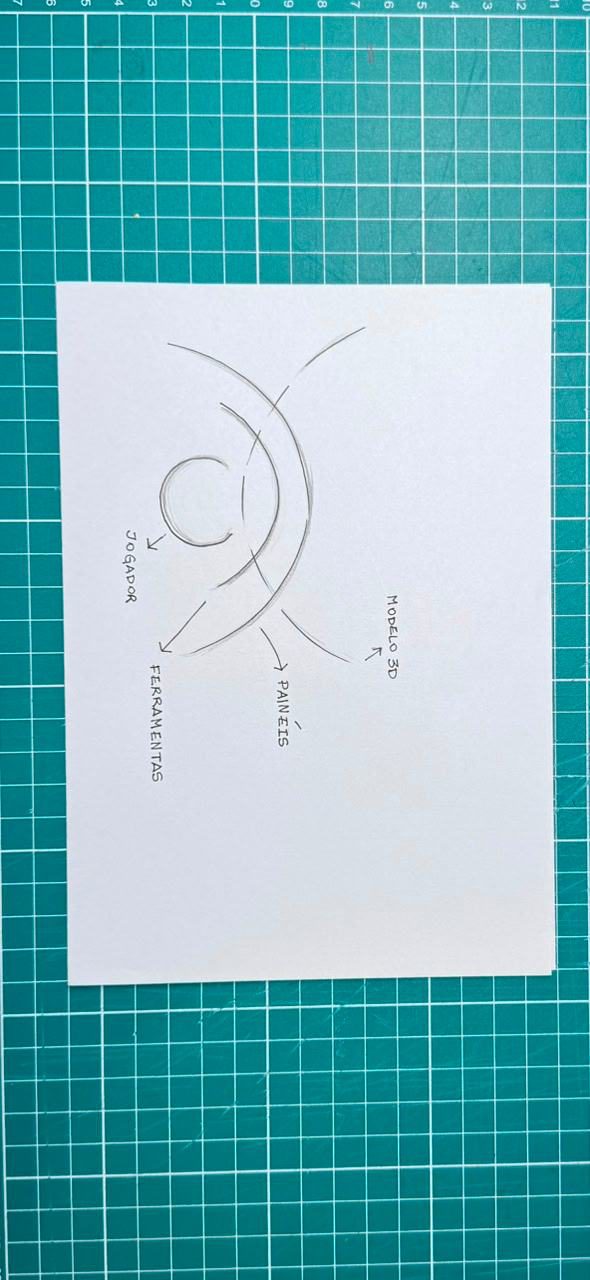
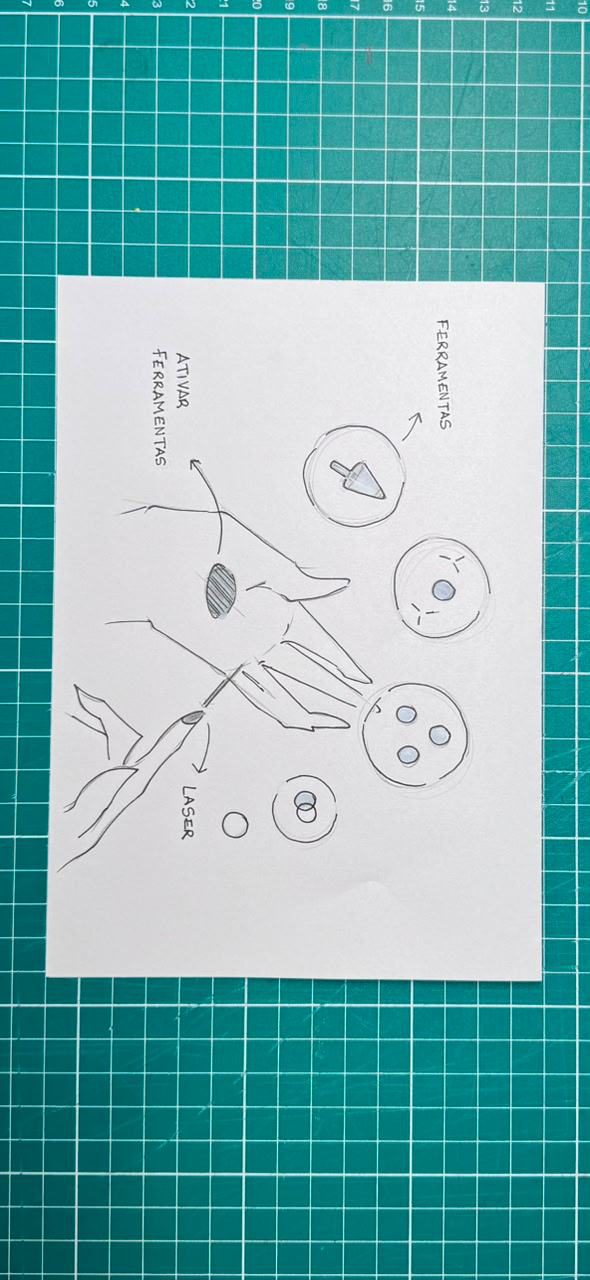
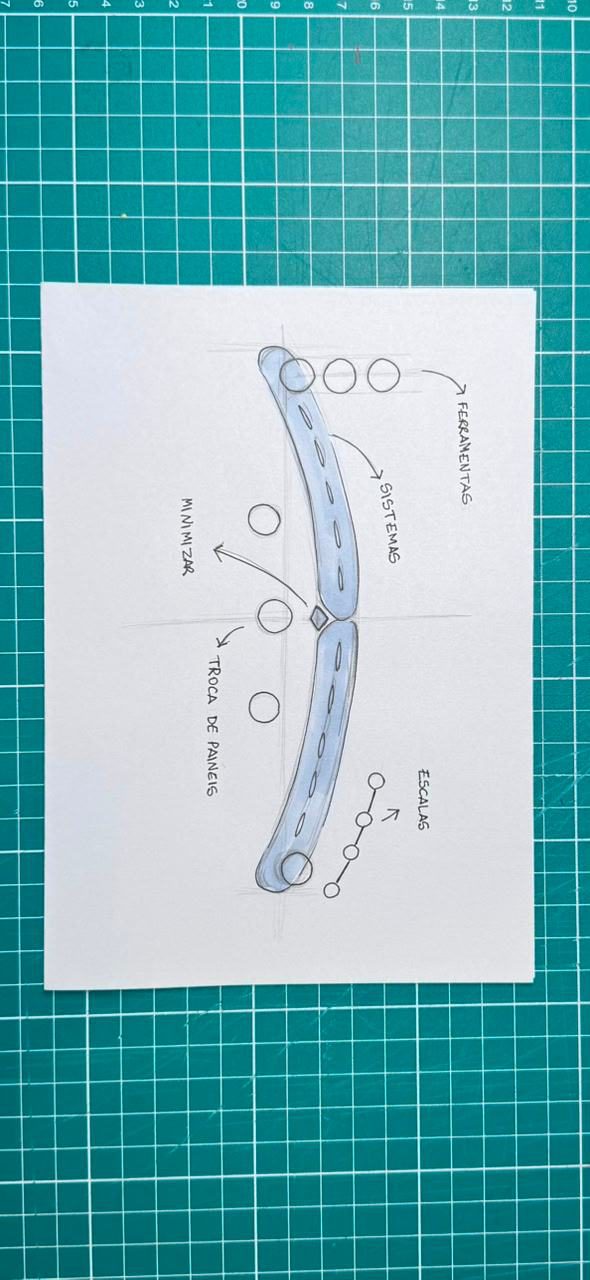
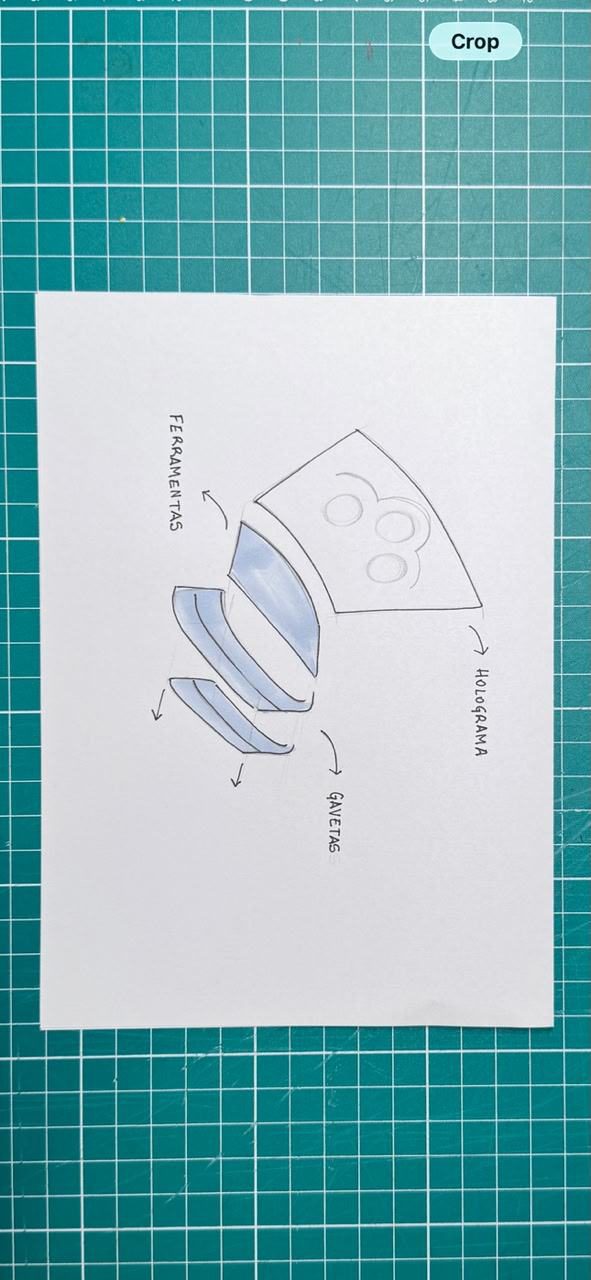
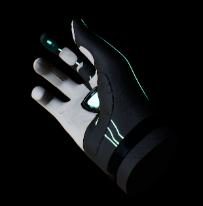
Sketches exist to communicate ideas through curves, lines and call-outs in a simple, fast and efficient way. In VR prototyping I find room for more illustrative sketches, simulating complex interactions that engage the movement of the human body and occupy three-dimensional space. The initial hypotheses covered the spatial organisation of panels and 3D models around the player: turning flat panels into curved ones and clearing the player’s field of view by adding quick tools to their hands.
3D Prototype
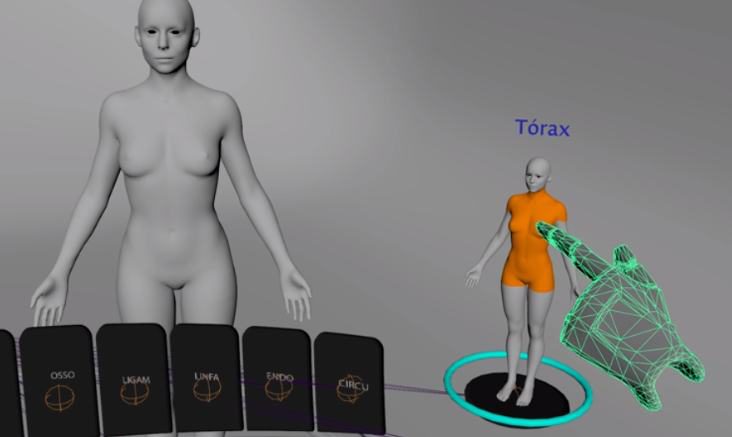
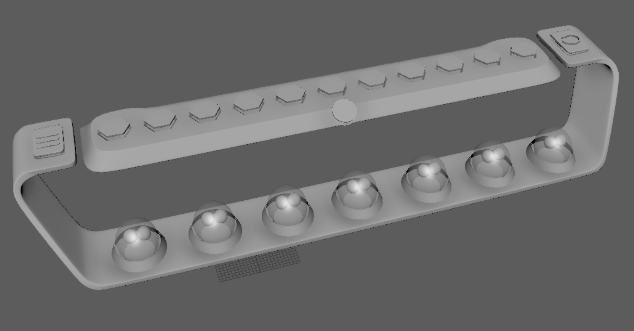
Because the experience is immersive, sketches must be validated in an immersive environment too, so that the ergonomics of the interactions and the legibility of text and iconography can be tested.
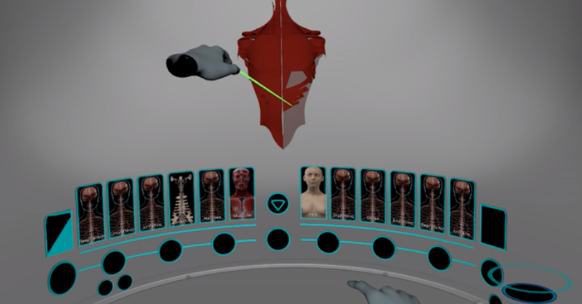
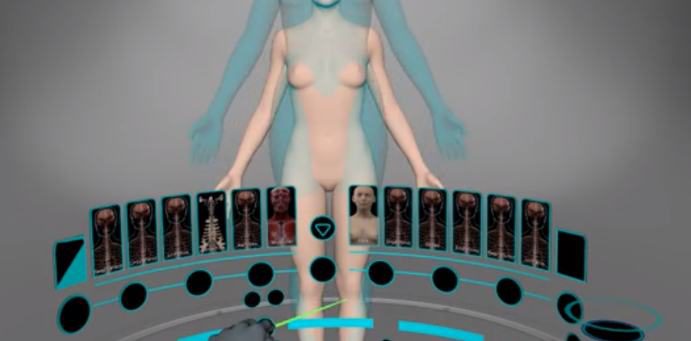
The process started in Quill, a 3D sketching tool in VR; once the initial layout was tested, we designed the interface in Maya. More complex experiences involve Maya animations to guarantee visual feedback for narrative or micro-interactions.
Visual Explorations
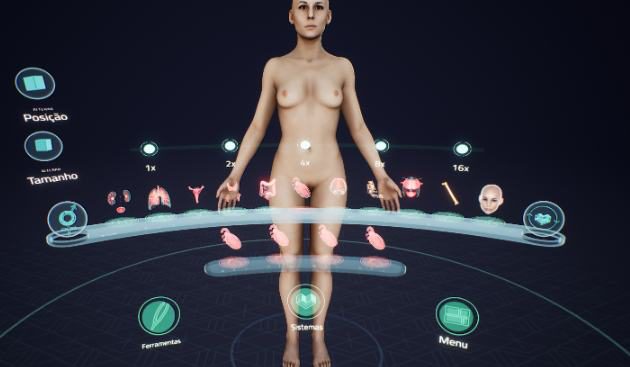
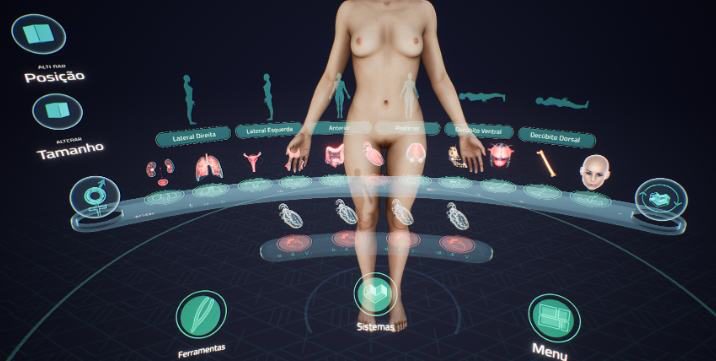
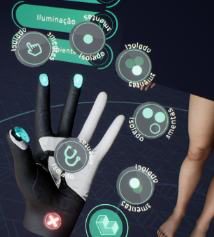
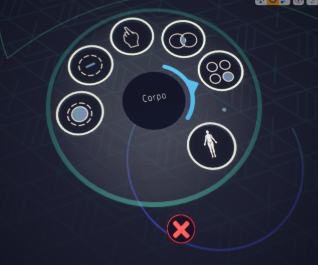
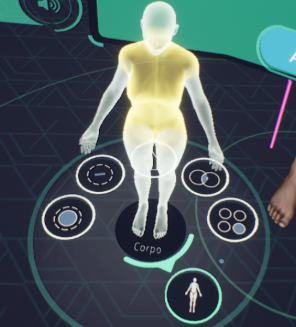
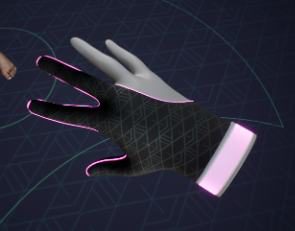
Once the interfaces were built in Maya, we moved into visual refinement, testing colours, materials, proportions and interactivity.
Additional Interface
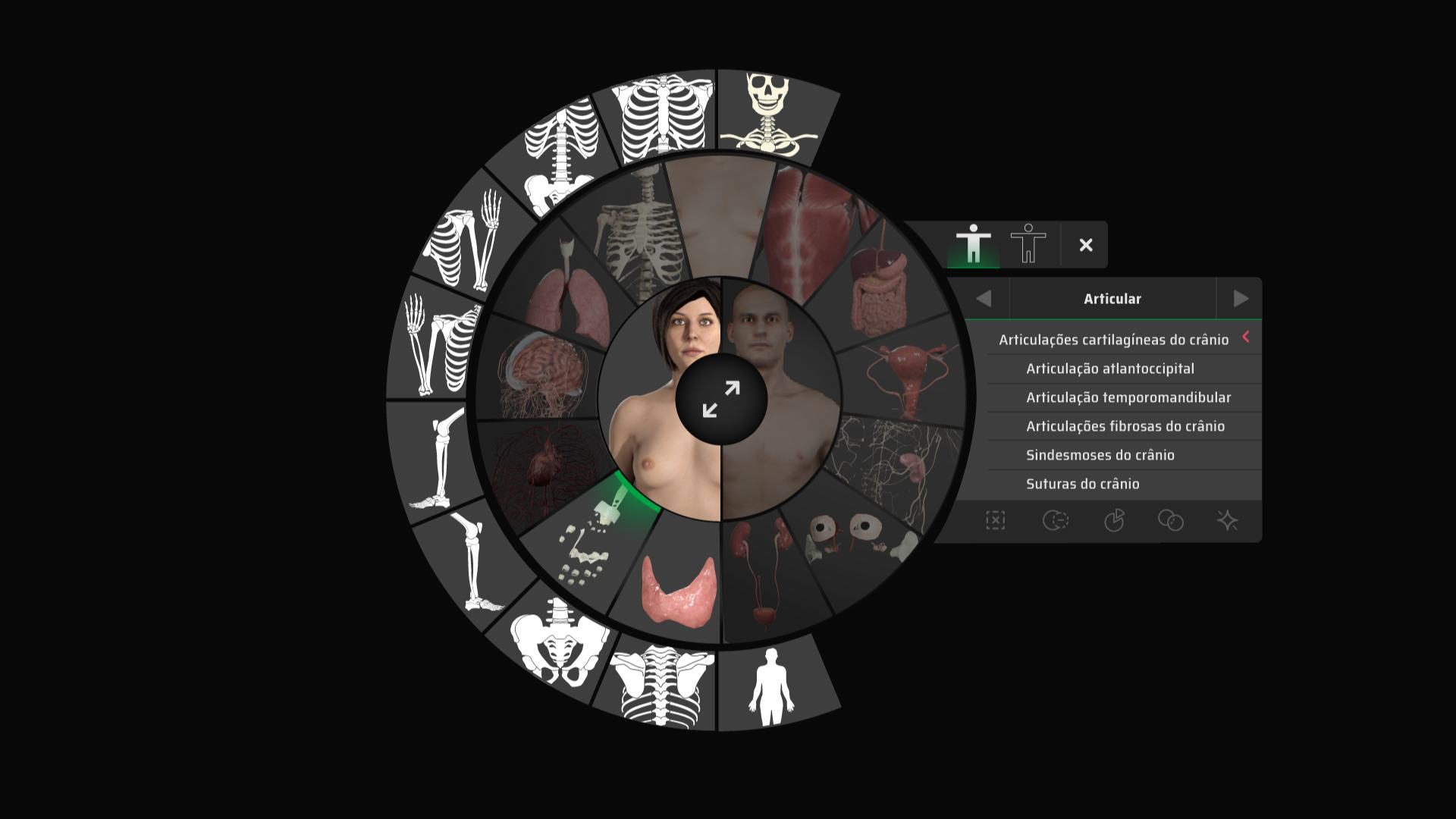
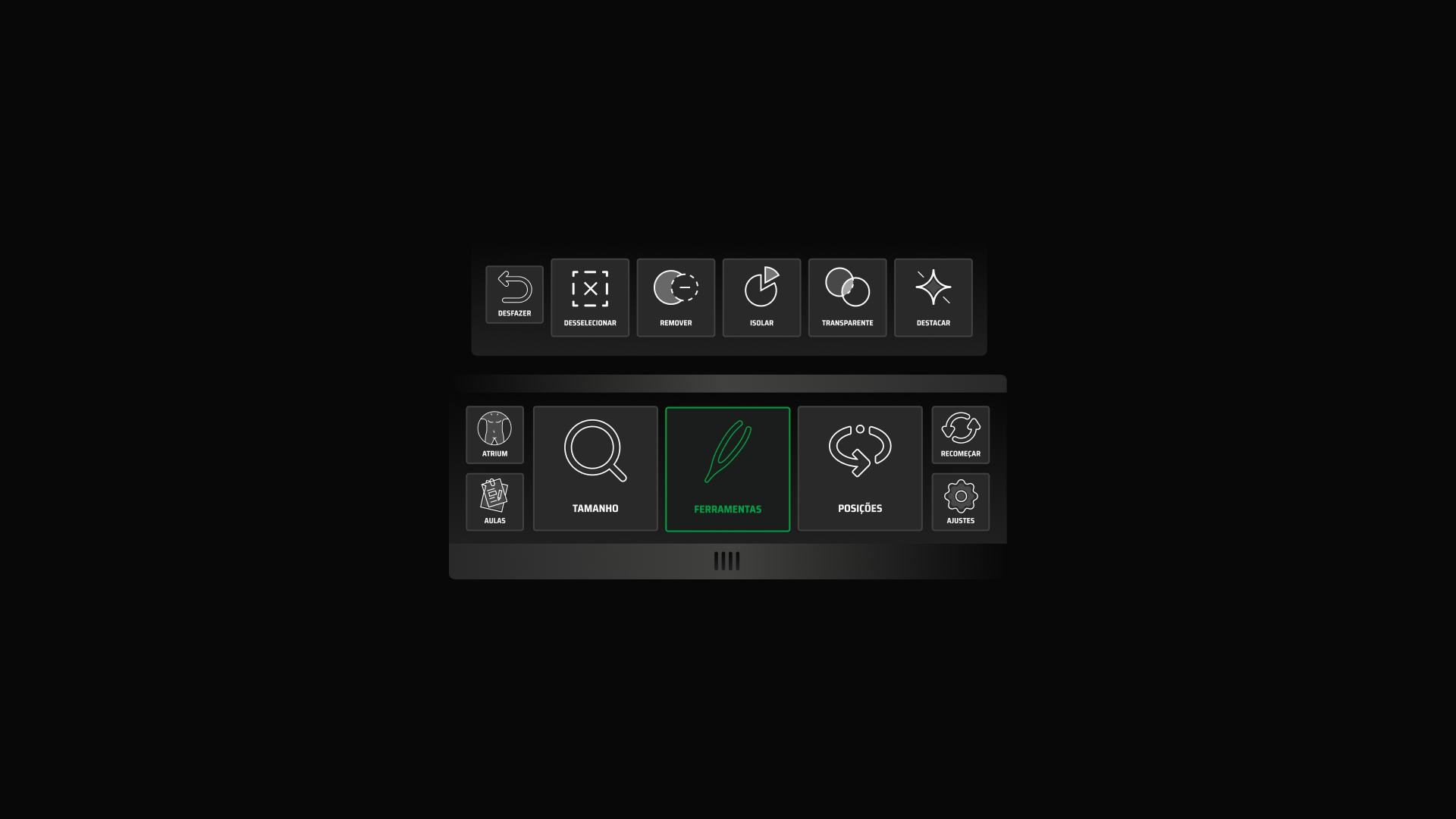
We designed a secondary interface to quickly replace existing assets, focused on shortening the interface learning curve by using imagery of the body’s systems and adding new study functions to the overall experience.
Learnings
User research showed a large distance from games and technology: most students neither play games nor have direct contact with VR headsets, which raised the following hypotheses:
- Low exposure to the gaming ecosystem would make it harder to adapt to the controllers — but no direct relationship was found: students without that background were equally able to execute the commands without major difficulty;
- Regardless of exposure to technology or games, the complexity of the experience grows with the number of buttons that must be memorised to perform actions. We therefore reduced the number of buttons, concentrating the main actions on those with the strongest haptic feedback (Trigger and Grab). Visual feedback and the spatial location of the buttons inside VR do aid memorisation;
- Older students tend to struggle with the buttons more than younger ones.
Virtual reality can be met with wonder and appreciation, or with fear and discomfort. Designing a safe space where the user feels protected, without perceiving the outside world, is essential to a pleasant journey.
Results
- Cognitive load was reduced, measurable in the total time a user takes to learn the core mechanics of the experience;
- Users felt more comfortable: revising the speed and placement of the panels improved the sense of order and control over the learning environment;
- Teachers and students are regularly impressed by the experience, often moved by it and motivated to explore anatomy beyond the requirements of the class.